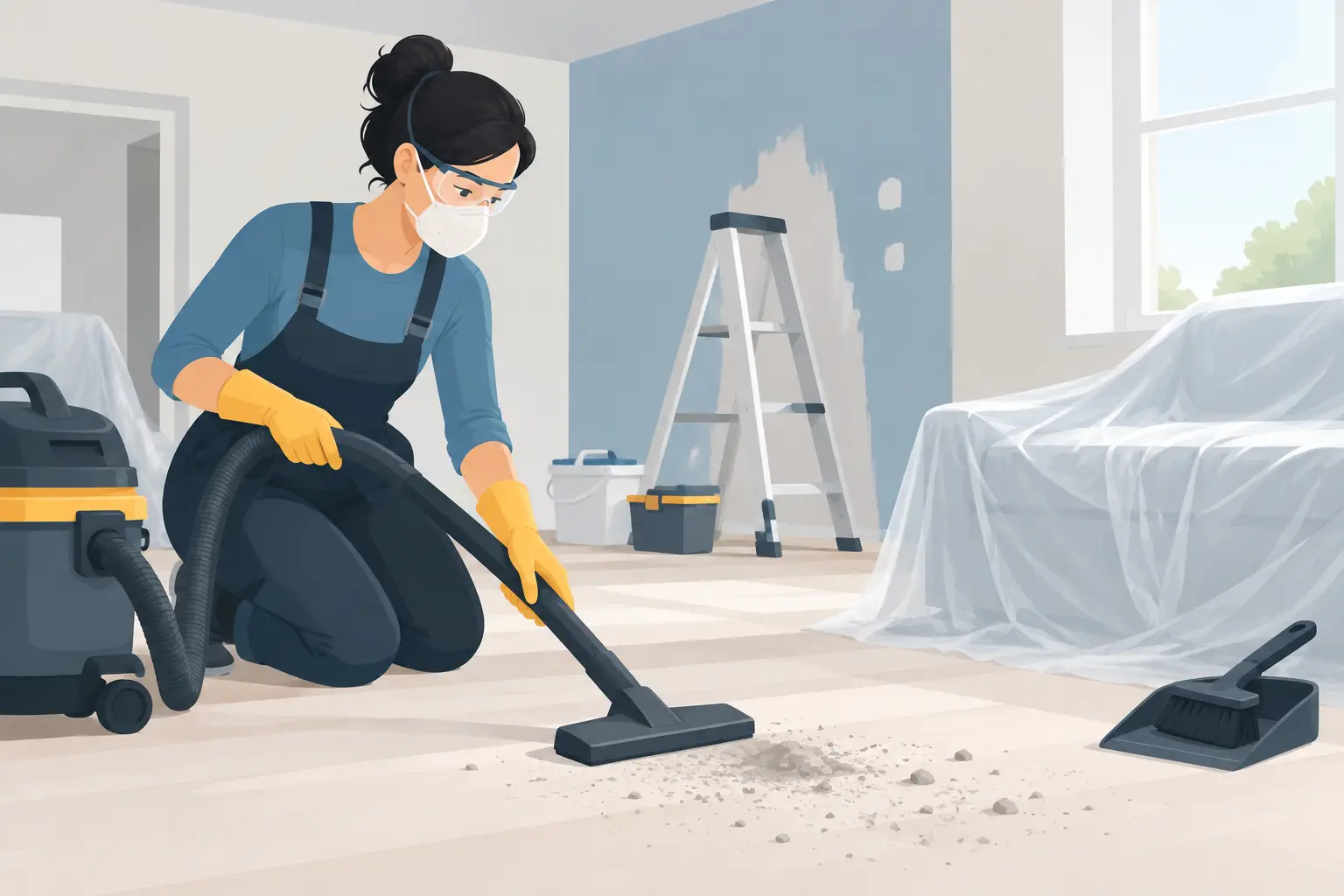
How to Remove Renovation Dust Without Spreading It
Renovation dust reappears after you think the work is finished: on sills, inside drawers, under furniture, and in the air every time someone walks through. Knowing how to remove renovation dust is mostly about not spreading it, because the usual approach of wiping surfaces and vacuuming once simply redistributes it and buys you a week.
This guide covers why construction dust behaves differently from household dust, the order that actually clears it, the three-vacuum rule, and the point at which a standard clean will not get there. If you are deciding whether to hand it over, the cost comparison is near the end.
Why Renovation Dust Is a Different Problem
Household dust is mostly fabric fibres and skin. It is heavy, it settles, and it stays where it lands. Construction dust is drywall compound, sawdust, concrete and silica, ground far finer. Particles that fine stay airborne for hours and travel through a home on air currents you cannot see.
Two consequences follow. First, it gets everywhere, including rooms where no work happened, inside closed cabinets and through the HVAC system. Second, it resettles. Clean a surface while dust is still suspended and it will be dusty again the next morning, which is why people conclude the cleaners “missed it” when the real problem was timing.
Drywall dust also behaves badly with water. Wipe it with a wet cloth and the compound turns to a thin paste that smears into a film, particularly on glass, trim and floors. That is the single most common mistake.
Let It Settle First
Wait at least 24 hours after the last dusty work before cleaning, and longer if sanding was involved. Cleaning too early is wasted effort.
During that window, leave the HVAC system off so it is not circulating dust through ducts into rooms you have already finished. Change the furnace filter afterwards, and expect to change it again a week later. If you ran the system during the work, the ducts may need attention from a specialist, which is a separate trade from cleaning.
Open windows if weather allows, and if you have a box fan, put it in a window facing outward to pull air out rather than push it around. In a Vancouver winter that is often not practical, in which case simply allow more settling time.
The Order That Works
Top to bottom, dry before wet, floors last and vacuumed more than once. Every one of those matters more here than in a normal clean.
| Step | Method | The Mistake to Avoid |
|---|---|---|
| 1. Remove debris and sheeting | Fold plastic inward, bag offcuts | Shaking sheeting out indoors |
| 2. Ceilings, light fixtures, vents | Vacuum with a brush head, dry | Starting with a damp cloth |
| 3. Walls and trim | Dry microfibre or vacuum first | Wet-wiping drywall dust into paste |
| 4. Cabinets and built-ins | Vacuum inside, then damp wipe | Cleaning only the exteriors |
| 5. Windows, tracks, doors | Vacuum tracks, then glass last | Glass before the frame above it |
| 6. Counters and surfaces | Vacuum, then damp wipe | Dry-dusting, which relaunches it |
| 7. Soft furnishings | Upholstery tool, then launder | Beating or shaking them |
| 8. Floors, three passes | Vacuum, wait, vacuum, then mop | One pass and a mop |
Step three is where most DIY cleanups fail. Vacuum or dry-wipe drywall dust off a surface before any moisture touches it. Once it is wet it stops being dust and becomes a film that needs far more work to remove.
The Three-Vacuum Rule
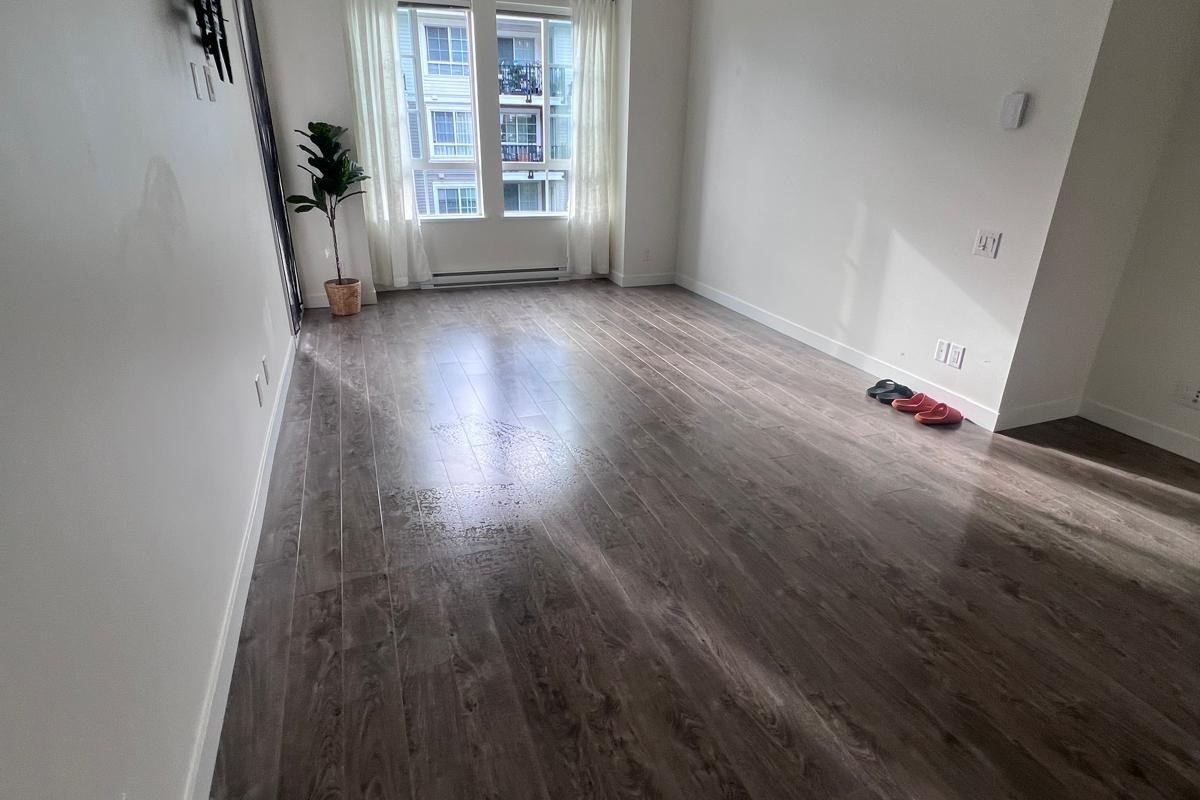
Floors need vacuuming at least three times across the cleanup, not once. Vacuum after the high surfaces are done, wait several hours for what you disturbed to settle, vacuum again, and vacuum a third time the following day before mopping.
Use a vacuum with a HEPA filter if you have one. A standard household vacuum without good filtration passes fine particles straight through the exhaust and back into the room, which means you are blowing dust around while believing you are removing it. If your vacuum has a bag, expect to change it, and if it has a cartridge filter, expect to clean it part way through.
Mop only at the end, and change the water more often than feels necessary. Dirty mop water on fine dust leaves a haze that shows up as soon as the light changes.
The Places People Miss
Fine dust collects where air slows down, which is rarely where you look. The common misses:
- Inside cabinets and drawers that were closed throughout the work
- The tops of door frames, upper cabinets and the fridge
- Window tracks, and the underside of sills
- Light fixtures, ceiling fan blades and extractor covers
- Inside the washing machine and dryer drum
- Radiator fins, baseboard heaters and vent grilles
- Behind and beneath appliances that were pulled out for the work
- Closet shelves and the floor beneath hanging clothes
Expect to repeat a light pass about a week later. Even a thorough cleanup leaves some suspended dust that will settle once, and a single follow-up wipe of horizontal surfaces usually ends it.
When a Standard Clean Will Not Get There
A deep clean is scoped for household buildup, not construction residue. The two need different time, different filtration and sometimes different equipment, which is why post-construction is priced as its own tier rather than as an add-on.
Hand it over when any of these apply: drywall sanding happened indoors, the HVAC ran during the work, the job involved concrete cutting or silica, the space has to be usable on a fixed date, or you have already cleaned once and the dust came back.
| Property Size | Post-Construction | Standard Deep Clean |
|---|---|---|
| Up to 600 sq ft | $299 + tax | $249 + tax |
| Up to 1,000 sq ft | $349 + tax | $299 + tax |
| 1,000 to 1,300 sq ft | $399 + tax | $349 + tax |
| 1,300 to 1,500 sq ft | $449 + tax | $399 + tax |
| 1,500 to 1,800 sq ft | $499 + tax | $449 + tax |
Rates are flat by property size, so a job that takes longer than expected does not cost more. For commercial and multi-unit work, post-construction cleaning is quoted per site after a walkthrough. The pricing model is explained in flat-rate house cleaning.
Keeping It From Coming Back
If more work is scheduled, seal doorways with plastic and tape rather than closing doors, which do almost nothing against fine dust. Lay protection on floors along the route trades will walk, change the furnace filter after each dusty phase, and keep the HVAC off during the work itself.
Ask trades to clean up at the end of each day rather than at the end of the job. Dust that is removed daily never gets the chance to migrate through the whole home, and it is a reasonable thing to put in writing before work starts.
If you are turning a unit over for a tenant or sale afterwards, book the cleanup while the space is still empty. It is substantially faster with no furniture, and the result is better. Our apartment turnover walkthrough covers that sequence, and how to prepare for cleaners covers what to have ready.
Post-Renovation Cleaning Across Metro Vancouver
We handle post-renovation and post-construction cleanups across the Lower Mainland, including Vancouver, Downtown Vancouver, Kitsilano, North Vancouver, West Vancouver, Burnaby, Richmond and Surrey.
If the trades have finished and you have a date to hit, get a flat-rate quote and you will know the cost before anyone starts.
Frequently Asked Questions
How do you remove renovation dust without spreading it?
Wait at least 24 hours for it to settle, keep the HVAC off, then work top to bottom using dry methods before wet ones. Vacuum fine dust off surfaces before any moisture touches them, and leave floors until last with at least three vacuum passes before mopping.
Why does construction dust keep coming back?
It is ground far finer than household dust, so it stays airborne for hours and resettles after you clean. Cleaning before it has settled, or running the HVAC during or straight after the work, both guarantee it reappears. Expect one light follow-up pass about a week later.
Can I just wipe drywall dust with a damp cloth?
No, and this is the most common mistake. Drywall compound turns to a thin paste when wet and smears into a film, especially on glass, trim and floors. Vacuum or dry-wipe it off first, then damp wipe afterwards.
Do I need a special vacuum for construction dust?
A vacuum with HEPA filtration makes a real difference. Standard household vacuums without good filtration pass fine particles through the exhaust and back into the room, so you circulate dust while believing you are removing it. Expect to change the bag or clean the filter part way through.
How much does post-construction cleaning cost in Vancouver?
It is flat-rated by property size, starting at $299 plus tax for up to 600 square feet and rising to $499 plus tax at 1,500 to 1,800 square feet. That is one tier above a standard deep clean, reflecting the extra time and filtration construction residue needs.
Should I clean before or after the furniture goes back?
Before, always. An empty space is substantially faster to clear and the result is better, because fine dust collects under and behind anything left in place. If you are turning a unit over for a tenant or sale, book the cleanup while it is still empty.
Related Cleaning Guides
- Deep Cleaning vs Standard Cleaning: Which Do You Need?
- An Apartment Turnover Clean, Step by Step
- What Is Included in a Deep Clean?
- Post-Construction Cleaning Services
- Deep Cleaning Services
About the Author
Goldy Grewal, Founder of Speedy Sparkle Cleaning Services
Goldy Grewal founded Speedy Sparkle Cleaning Services to bring honest, flat-rate pricing to Vancouver homes. The team has completed over 1,000 cleans across Metro Vancouver, holds a 4.9 star rating from 79 plus reviews, carries $2M liability insurance, is WorkSafe BC registered, and is fully background checked.
About the author : Goldy Grewal

Goldy Grewal is the founder of Speedy Sparkle Cleaning Services, a Vancouver-based home and commercial cleaning company. Goldy started the business to bring honest, flat-rate pricing to Vancouver homeowners after seeing too many families hit with surprise hourly bills. With 5+ years of experience and 1,000+ cleans completed across Greater Vancouver, Goldy leads a fully insured ($2M liability), WorkSafe BC registered, background-checked team.