
Commercial Cleaning Scope of Work: A Vancouver Checklist and Guide
A cleaning quote looks clear until the first missed task. Was the inside of the microwave included? Who handles elevator tracks, the breakroom fridge, or a spill in the lobby? A written commercial cleaning scope of work answers those questions before service starts, so managers, staff and cleaners are working from the same document instead of the same assumption.
This guide gives you a task and frequency checklist you can copy, the quality standards that make a scope enforceable, the exclusions that cause most disputes, and how the scope should change for an office, a retail unit, a strata building, a clinic, a school or a warehouse. If you only want the checklist, it is the first table below.

Start With the Space, Not a Generic Checklist
Every facility has different traffic patterns, risks and priorities. A small professional office needs spotless restrooms and presentable client-facing areas each evening. A warehouse needs dust control, floor care and reliable work around active operations. A daycare needs careful attention to high-touch surfaces and a deliberate choice of products.
Start by documenting the property. Record total floor area, number of floors, restrooms, kitchens or breakrooms, elevators, entrances, meeting rooms, storage areas and any tenant or public spaces. Photos and a walkthrough are worth the time because they surface what floor plans miss: glass partitions, carpeted stairs, loading docks, high ledges.
Then ask what matters to the people who use the building. Property managers usually prioritise common-area presentation. Office administrators care about desks, restrooms and waste. Retail operators need polished floors and fingerprint-free glass before opening. The plan should follow that reality rather than treating every room identically.
The Commercial Cleaning Task and Frequency Checklist
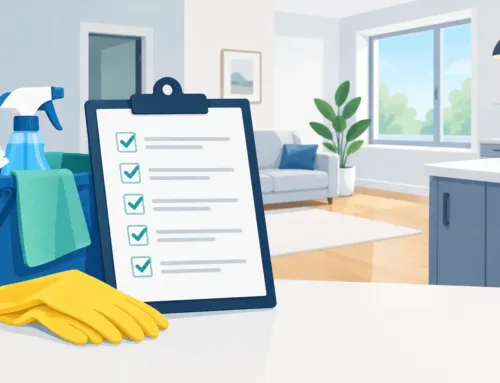
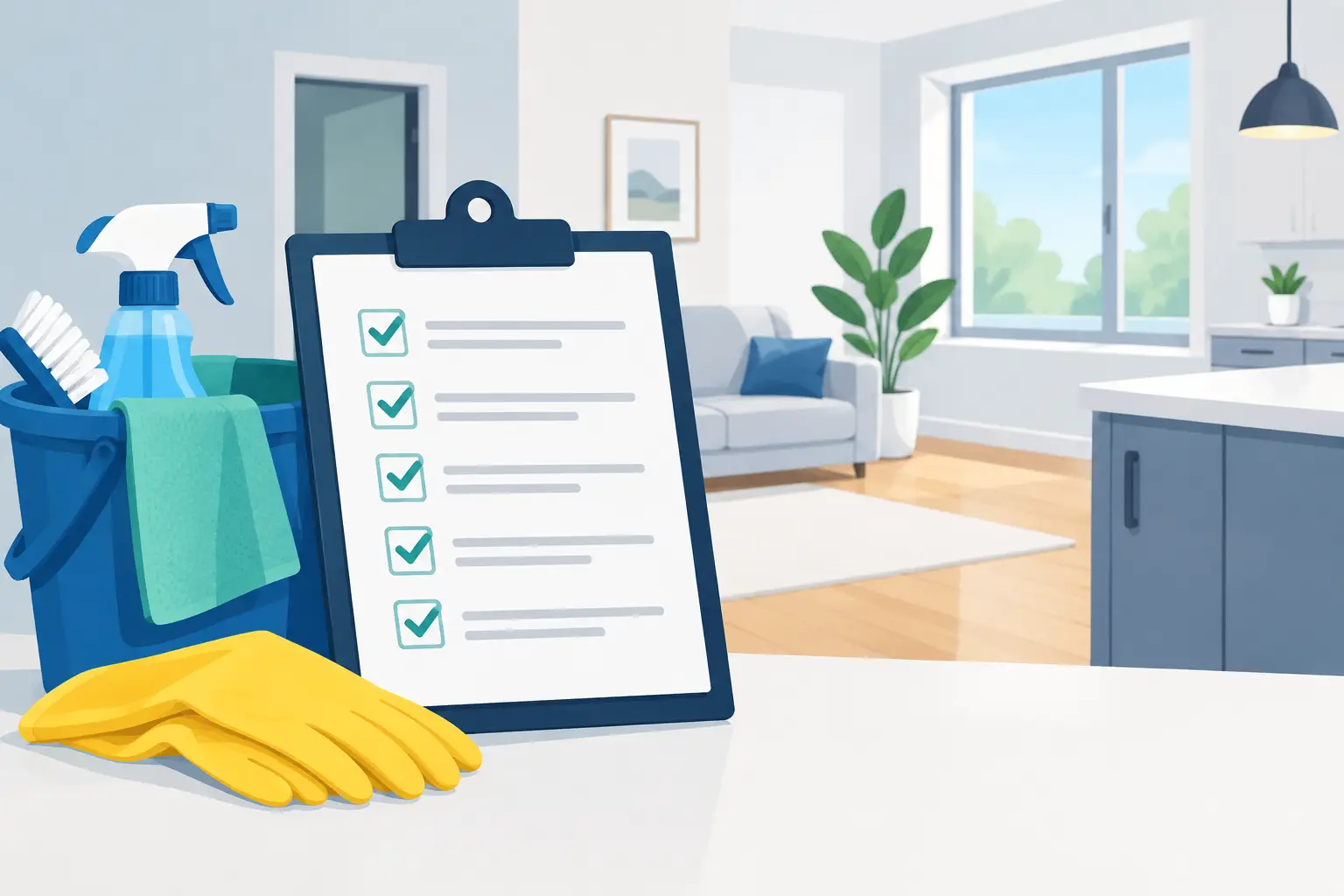
The most useful scopes separate work by area and state how often each task happens. “Clean office” is unenforceable. “Empty all desk-side and kitchen waste, replace liners as needed, vacuum carpeted areas, and disinfect restroom touchpoints after business hours, Monday to Friday” is measurable. Use this as your starting template and delete what does not apply:
| Area | Every Visit | Weekly | Monthly or Quarterly |
|---|---|---|---|
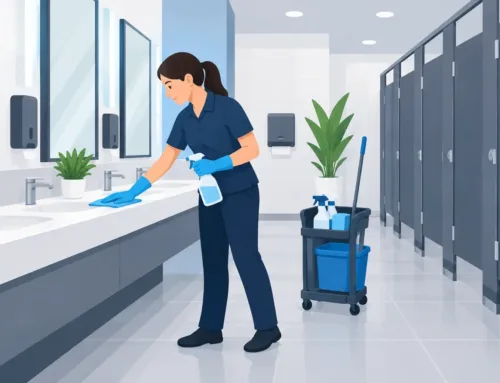
| Restrooms | Disinfect fixtures and touchpoints, clean mirrors, mop, empty waste, restock | Partition walls, door edges, vent grilles | Descale fixtures, grout detail, high dusting |
| Kitchen or breakroom | Counters, sink, tables, appliance exteriors, waste and recycling | Inside microwave, cabinet fronts, backsplash | Inside fridge, degrease hood, inside cabinets |
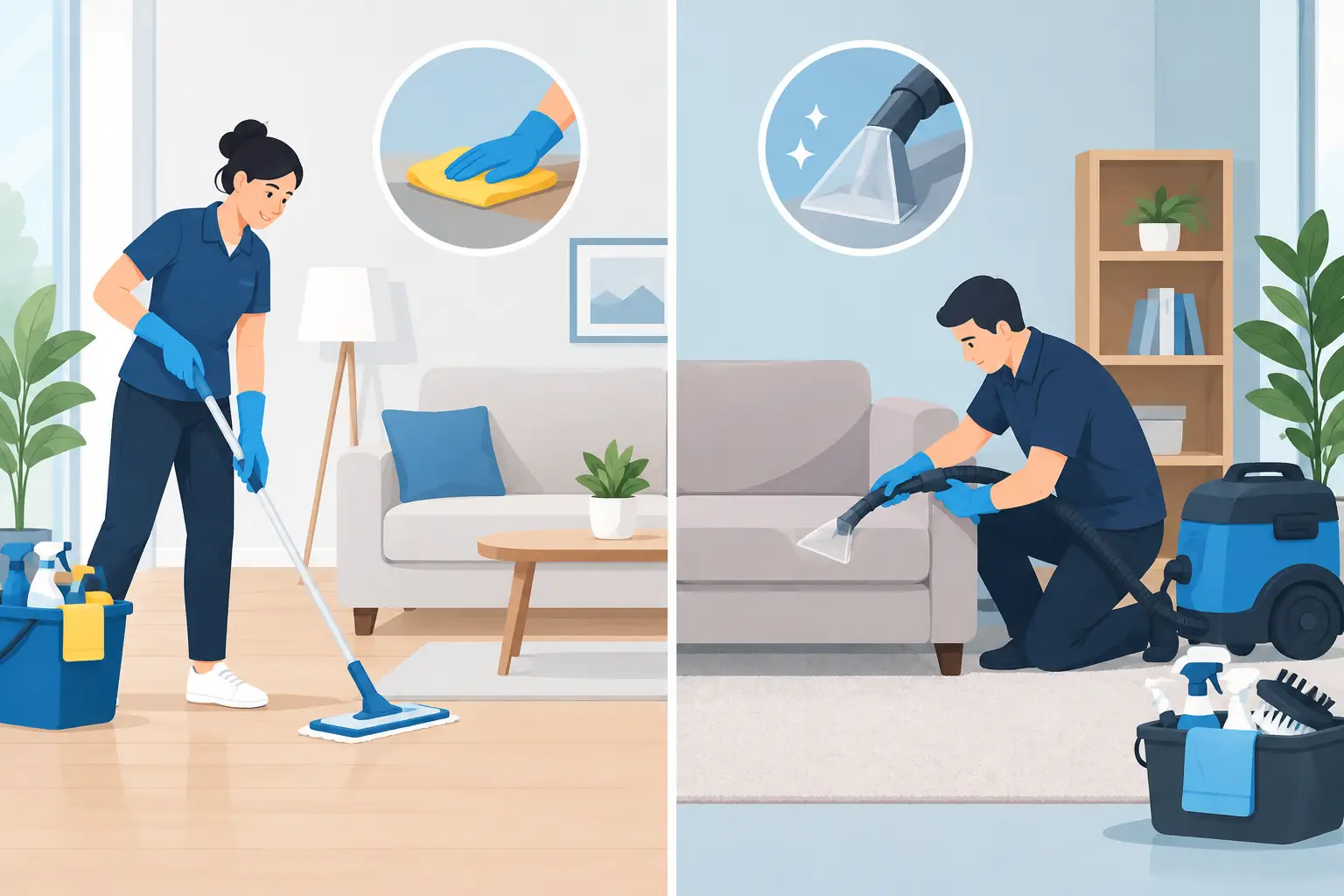
| Reception and entry | Glass at eye level, floors, mats, waste, counter | Full-height glass, ledges, seating wipe-down | Upholstery spot clean, entry mat service |
| Workstations and offices | Waste, vacuum, spot-clean spills | Detailed dusting of ledges, sills, monitors arms | Baseboards, blinds, chair bases |
| Meeting rooms | Table, chairs reset, waste, glass marks | Dust AV equipment surrounds, whiteboard trays | Upholstery, carpet spot treatment |
| Hard floors | Sweep and damp mop | Edges and corners, spot scrub | Machine scrub, strip and seal as scheduled |
| Carpet | Vacuum traffic lanes | Full vacuum including edges | Hot water extraction |
| High-touch points | Door handles, light switches, elevator buttons, handrails, faucets | Shared equipment, printer panels | Audit and review frequency |
| Common areas and elevators | Floors, glass, waste, elevator tracks | Mail room, stairwells, garbage room | High dusting, light diffusers |
Frequency depends on foot traffic, weather, business hours and the work done on site. In a Vancouver winter a lobby needs entry mat service and mopping far more often than it does in August, so write the wet-season uplift into the scope rather than renegotiating it in November. A lightly used office does not need carpet extraction as often as a busy retail store.
Set a Clear Standard of Clean
A scope needs quality standards, not only chores. Without them one person considers a floor clean because it was vacuumed, while another expects corners, edges and visible debris handled.
Use observable standards. Restroom mirrors streak-free. Bins emptied without overflow. Floors free of visible dirt and sticky residue. Entry glass free of fingerprints at eye level. Touchpoints cleaned by the agreed process. Those give supervisors and cleaning teams one shared reference instead of two opinions.
Distinguish between cleaning, sanitising and disinfecting. Cleaning removes soil. Sanitising and disinfecting involve product-specific directions, contact times and suitable surfaces. In clinics, daycares and other sensitive settings, write that distinction in. Product choice should also account for allergies, occupants, floor materials and any environmental preference.
Make Inclusions and Exclusions Plain
Surprises come from assumptions. The scope should state what the regular price covers and what needs separate approval. That protects the facility and the cleaning team equally.
Common exclusions include exterior window cleaning, deep carpet extraction, post-construction debris removal, biohazard cleanup, pest waste, high-reach work, clutter removal and cleaning inside personal drawers or locked offices. None of those are unavailable. They need different equipment, staffing, timing or pricing, which is why post-construction cleaning and exterior power washing are quoted as their own jobs.
Be equally specific about supplies. Does the cleaner provide equipment and products? Does the client supply hand soap, paper towels, liners and toilet paper? Who approves replacements when stock runs low? A two-line supply protocol stops a restroom running out because each party assumed the other was handling it.
Plan for Access, Security and Safety
A reliable scope covers how cleaners enter, work in and secure the property. List access methods, alarm procedures, lock-up requirements, restricted rooms, parking instructions and the contact for urgent issues. If service is after hours, say whether staff may be present and which areas must stay available.
Security matters as much as appearance. Ask for written confirmation of insurance coverage, worker screening and WorkSafe BC registration. For properties holding confidential files, medical records or valuable inventory, define rules for desks, records, keys and incident reporting.
Keep safety details practical. Specify wet-floor signage, approved products for sensitive surfaces, ladder restrictions, and the procedure for reporting damaged flooring, leaks, broken fixtures or hazards. A cleaning team should not be fixing the problem, but they should know how and when to report it.
Include Communication and Quality Checks
Even a detailed scope needs a route for change. Facilities evolve: a meeting room becomes daily-use, a tenant moves out, a busy season doubles the waste volume. Set a process for requesting extra work, approving the cost and updating the schedule.
Regular quality checks stop small issues becoming standing complaints. A site checklist, a monthly walkthrough or a shared log is enough. The point is to make feedback quick and fair, not to generate paperwork.
Define who receives reports and the expected response time. A missed bin can wait for the next visit. A flooded restroom, broken glass or major spill needs a faster path. Document that and your team is not chasing answers during the stressful moment.

How the Scope Changes by Facility Type
The best scope follows the building’s real use. Forcing one template across every property is where most service failures begin.
| Facility | Scope Priority | Easy to Get Wrong |
|---|---|---|
| Office and retail | Restrooms, kitchen, workstations, reception, storefront glass | Glass at full height, fitting rooms, checkout counters |
| Strata and multifamily | Lobbies, hallways, elevators, mail room, garbage room, amenities | Garbage room odour, elevator tracks, parkade entry |
| Medical and dental | Patient-facing rooms, touchpoints, documented procedures | Product selection, contact times, waste separation |
| Schools and daycares | Restrooms, shared touchpoints, activity areas | Child-appropriate products, frequency during illness season |
| Warehouse and industrial | Dust control, floor care, loading areas, safety zones | Working around operations, high-level dust |
| Hotels and event venues | Guest-facing presentation, fast reset between events | Turnaround windows, post-event waste volume |
Questions to Ask Before You Approve a Scope
Before signing a commercial cleaning agreement, make sure you can answer these without checking: What happens at every visit, and what is weekly or monthly? Which areas are excluded? Who supplies consumables? How are missed tasks reported and corrected? What happens when you need an extra service or an emergency cleanup?
Ask whether the provider can scale. A service that suits a small office should adapt when you add staff, extend hours, host an event or take on a second location. If you are weighing a contract against hiring a cleaner directly, we worked through the real numbers in in-house versus outsourced janitorial services, and the day-to-day side of office work is covered in our guide to office cleaning in Vancouver.
A strong scope should make your day easier rather than add a job to your plate. When every task, frequency, standard and contact is written down, the facility stays clean and your team stays on the work that matters.
Commercial Cleaning Across Metro Vancouver
We write and deliver commercial scopes across the Lower Mainland, from office towers in Downtown Vancouver and strata buildings in the West End, to business parks in Burnaby and Metrotown, warehouses in Richmond and Surrey, and facilities in Coquitlam, New Westminster and Langley. There is more regional detail in our overview of office and commercial cleaning in Vancouver and Surrey and strata cleaning across Metro Vancouver.
If you want a scope drafted for your building rather than a generic quote, book a walkthrough and we will put the task list, frequencies and standards in writing before anything is signed.
Frequently Asked Questions
What is a commercial cleaning scope of work?
It is a written document that lists every cleaning task, the area it applies to, how often it happens, the quality standard it must meet, and what is excluded from the regular price. It is what turns a cleaning quote into an agreement you can hold a provider to.
What should a commercial cleaning checklist include?
Four things for each area: the tasks done at every visit, the weekly tasks, the monthly or quarterly tasks, and the observable standard that defines “done”. Cover restrooms, kitchen or breakroom, reception and entry, workstations, meeting rooms, hard floors, carpet, high-touch points and common areas.
What is usually excluded from a commercial cleaning contract?
Exterior window cleaning, deep carpet extraction, post-construction debris, biohazard cleanup, pest waste, high-reach work, clutter removal, and cleaning inside personal drawers or locked offices. These are normally available as separately quoted jobs rather than contract inclusions.
How much does commercial cleaning cost in Vancouver?
Commercial work is quoted per site after a walkthrough rather than from a rate card, because frequency, restroom count, floor type and access hours affect the labour more than floor area alone. A defined scope is what lets you compare two quotes fairly, since the cheapest number is often the one covering the fewest tasks.
Who supplies the consumables, the cleaner or the client?
Either, as long as the scope says which. Most contracts have the cleaner supply equipment and cleaning products while the client supplies hand soap, paper towels, liners and toilet paper. Name an approval route for restocking so a restroom never runs out because of an unclear boundary.
How often should a commercial cleaning scope be reviewed?
Once a year as a minimum, and whenever the building changes. Adding staff, extending opening hours, a tenant moving in or out, or a seasonal traffic shift are all reasons to revisit frequencies before complaints start.
Related Cleaning Guides
- Office Cleaning in Vancouver: What a Good Plan Covers and Costs
- In-House vs Outsourced Janitorial Services
- Strata Cleaning Across Metro Vancouver
- Office and Commercial Cleaning in Vancouver and Surrey
- Janitorial Services
About the Author
Goldy Grewal, Founder of Speedy Sparkle Cleaning Services
Goldy Grewal founded Speedy Sparkle Cleaning Services to bring honest, clearly scoped cleaning to Vancouver homes and workplaces. The team has completed over 1,000 cleans across Metro Vancouver, holds a 4.9 star rating from 79 plus reviews, carries $2M liability insurance, is WorkSafe BC registered, and is fully background checked.
About the author : Goldy Grewal

Goldy Grewal is the founder of Speedy Sparkle Cleaning Services, a Vancouver-based home and commercial cleaning company. Goldy started the business to bring honest, flat-rate pricing to Vancouver homeowners after seeing too many families hit with surprise hourly bills. With 5+ years of experience and 1,000+ cleans completed across Greater Vancouver, Goldy leads a fully insured ($2M liability), WorkSafe BC registered, background-checked team.