
Hiring Your Own Cleaner vs Using a Cleaning Company
At some point most households comparing cleaning options land on the same question: hire someone directly and pay them yourself, or book a company. Hiring your own cleaner versus using a cleaning company is usually framed as a price comparison, and that is the part people get wrong, because the two options do not carry the same risk.
This guide sets out what each arrangement actually costs once you count everything, what happens when someone is injured or something is damaged, how cover and continuity differ, and when hiring privately genuinely is the better call. The comparison table is below.
The Two Arrangements
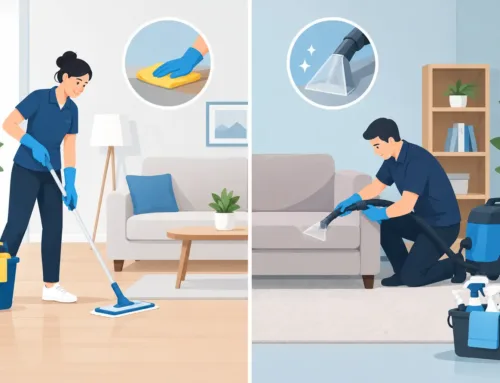
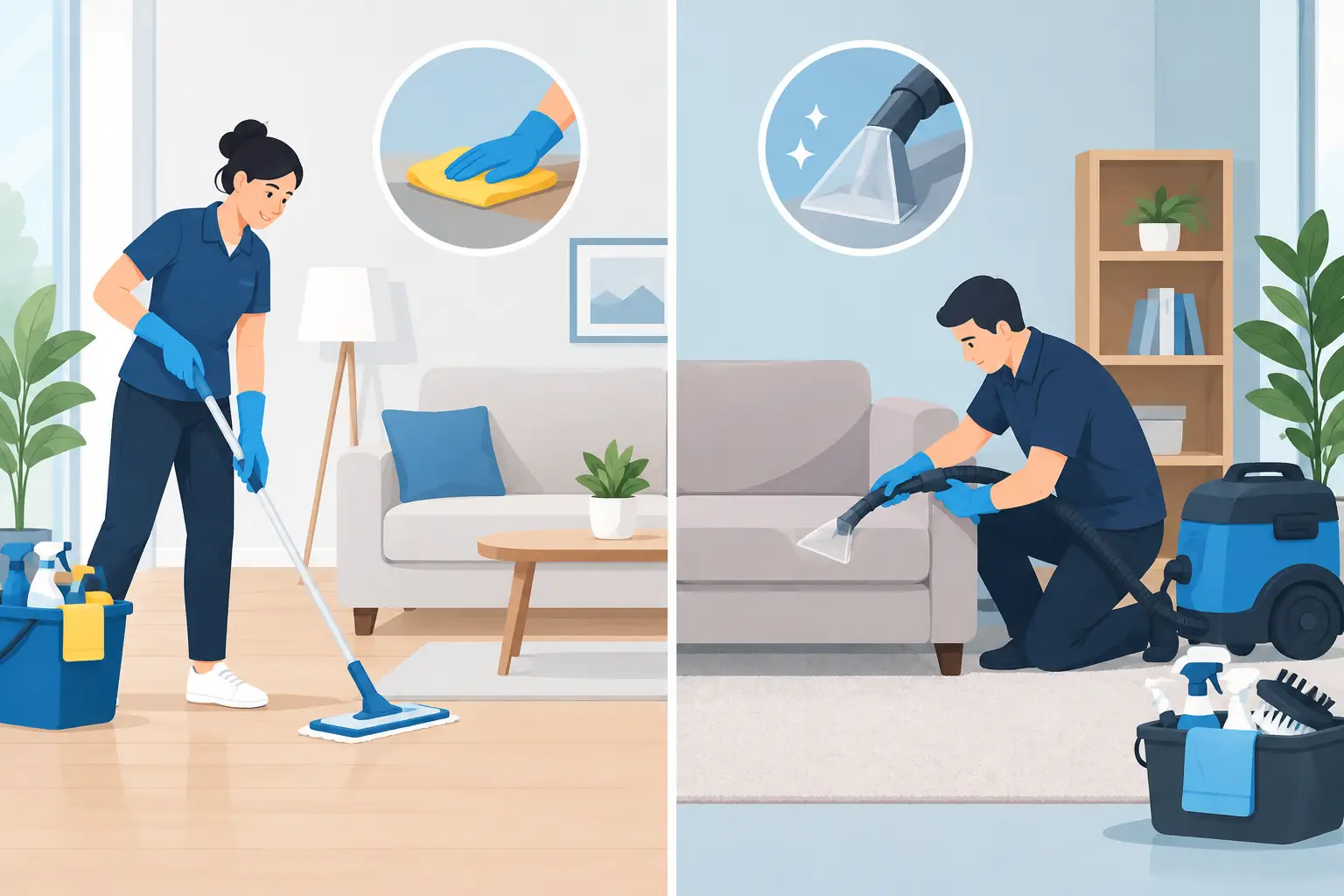
Hiring privately means you find an individual, agree an hourly rate, and pay them directly. You handle scheduling, you supply or agree the products and equipment, and you have no cover if the person cannot come. The relationship is between you and them.
Using a company means you buy a defined scope at a set price. The company handles recruiting, screening, training, scheduling, products, equipment, insurance and cover when someone is unavailable. Your part is to set expectations and hold them to the result.
Neither automatically cleans better. A long-standing private cleaner can know a home extremely well. A company brings trained staff, documented standards and a replacement when someone is ill. The real question is which risks you want to carry yourself.
| Hiring Privately | Using a Company | |
|---|---|---|
| Headline price | Hourly, often lower | Flat rate per visit, from $199 + tax |
| Price certainty | A long job costs more | The quoted number does not move |
| Liability insurance | Usually none, verify | Company policy, ask for the figure |
| Worker injury cover | Your exposure, check your position | WorkSafe BC registration |
| Background checks | Yours to arrange | Done before hiring |
| Cover for illness or holiday | None, the visit is missed | Replacement cleaner |
| Equipment and products | Often yours to supply | Supplied |
| Scope in writing | Usually informal | Defined checklist |
| Continuity of person | Same person every time | Usually consistent, not guaranteed |
| If something is damaged | Between you and them | Claim against the policy |
The Part the Hourly Rate Hides
A private hourly rate and a company’s flat rate are not measuring the same thing, which is why comparing them directly is misleading.
The hourly rate buys labour and nothing else. It does not include products, equipment, insurance, worker cover, screening, or a replacement when the person is unavailable. Some of those you will buy yourself and some you will simply go without. A flat rate buys the whole arrangement and, because the price is fixed to a defined scope, a job that runs long does not cost you more. We set that model out in flat-rate house cleaning in Vancouver.
The more consequential gap is what happens when something goes wrong. If a cleaner working in your home is injured, the question of who carries that is not one most households have thought about, and it is worth getting a clear answer on before you agree an arrangement rather than afterwards. A company registered with WorkSafe BC has already resolved it. We cover how cover actually works in what cleaning insurance covers, including the difference between liability cover and worker cover.
When Hiring Privately Genuinely Works
This is a real option and sometimes the right one. It tends to work when the arrangement is long-standing and low-risk.
If you already have someone you trust, they have been coming for years, and nothing has gone wrong, there is little reason to change. Continuity has genuine value, particularly for homes with specific routines, delicate surfaces or a pet that needs a familiar face.
It also suits very small or infrequent jobs where a company minimum would be poor value, and households that want the same individual rather than a rotating team. If you go this route, the sensible precautions are to confirm whether the person carries their own liability insurance, agree the scope in writing even informally, and be clear about what is and is not included.
When a Company Is the Safer Choice
A company earns its premium when continuity, cover and accountability matter more than the hourly number.
That is most obvious where the cleaner will be in the home unattended. Background screening, documented standards and an insured employer are the reason most clients are comfortable with unattended access, which we cover in do you have to be home for a cleaning service.
It also matters in strata buildings. Many councils require proof of liability insurance on file before a contractor gets access, and an individual usually cannot supply it. Preparing for a condo or strata visit covers what buildings typically ask for.
And it matters when the work is deadline-driven. A move-out clean ahead of an inspection, a deep clean before guests arrive, or a turnover between bookings all fail badly if a single person cancels and there is no cover. Our guide to what BC landlords can charge for at move-out explains why that receipt matters too.
A Note on the Commercial Version of This Question
If you are weighing this for a business or a building rather than a home, the economics are different and the numbers are larger. Payroll burden, WorkSafe BC premiums, supervision time, equipment and absence cover all scale differently across a facility. We worked that comparison through separately in in-house versus outsourced janitorial services, which is the commercial counterpart to this article.
How to Decide
Ask three questions. First, will the cleaner be in your home unattended, and are you comfortable with that without a background check having been done? Second, what happens to your week if they cannot come on the day? Third, if something is damaged or someone is injured, do you know who carries it?
If all three have comfortable answers, hiring privately is reasonable. If any of them makes you pause, that is what a company is for. Our team is background checked, we carry $2 million in liability insurance, we are WorkSafe BC registered, and we hold a 4.9 star rating from over 79 reviews across more than 1,000 cleans.
There is more on vetting either option in how to choose a house cleaning service in Vancouver and comparing the best house cleaning services in Vancouver.
Residential Cleaning Across Metro Vancouver
We provide recurring and one-time residential cleaning throughout the Lower Mainland, including Vancouver, Downtown Vancouver, Burnaby, Richmond, North Vancouver, West Vancouver, Surrey and Coquitlam. If you want the two options costed honestly against your actual home, get a flat-rate quote and compare it against what hiring privately would really involve.
Frequently Asked Questions
Is it cheaper to hire a private cleaner or a cleaning company?
A private hourly rate is usually lower on paper, but it buys labour only. It does not include products, equipment, liability insurance, worker cover, background screening or a replacement when the person cannot come. A flat rate buys the whole arrangement and does not increase when a job runs long.
What happens if a cleaner is injured in my home?
That depends on the arrangement, and it is worth getting a clear answer before work starts rather than afterwards. A company registered with WorkSafe BC has worker cover in place. With a private arrangement the position is less clear cut, so ask the question directly and check where you stand.
Do I need insurance to hire a cleaner privately?
Ask the individual whether they carry their own liability insurance, and check what your home insurance says about people working in your home. Many private cleaners do not carry cover, which means accidental damage becomes a conversation between the two of you rather than a claim.
Will I get the same cleaner every visit with a company?
Usually, though it is not guaranteed in the way it is with a private arrangement. The trade-off is that a company sends a replacement when your regular cleaner is ill or on holiday, where a private arrangement simply means the visit does not happen.
Why do strata buildings ask for proof of insurance?
Most councils require a certificate of liability insurance on file before granting contractor access to the building, because an uninsured worker on common property becomes the strata’s exposure. An individual cleaner often cannot supply one, which can make private arrangements impractical in some buildings.
Is this the same question as in-house versus outsourced janitorial?
No. That comparison is for businesses and buildings, where payroll burden, WorkSafe BC premiums, supervision and equipment scale across a facility. This article covers the residential version, where the main issues are insurance, cover and continuity rather than payroll economics.
Related Cleaning Guides
- What Cleaning Insurance Covers, and What It Does Not
- How to Choose a House Cleaning Service in Vancouver
- In-House vs Outsourced Janitorial Services (Commercial)
- Flat-Rate House Cleaning in Vancouver
- Recurring Maid Services
About the Author
Goldy Grewal, Founder of Speedy Sparkle Cleaning Services
Goldy Grewal founded Speedy Sparkle Cleaning Services to bring honest, flat-rate pricing to Vancouver homes. The team has completed over 1,000 cleans across Metro Vancouver, holds a 4.9 star rating from 79 plus reviews, carries $2M liability insurance, is WorkSafe BC registered, and is fully background checked.
About the author : Goldy Grewal

Goldy Grewal is the founder of Speedy Sparkle Cleaning Services, a Vancouver-based home and commercial cleaning company. Goldy started the business to bring honest, flat-rate pricing to Vancouver homeowners after seeing too many families hit with surprise hourly bills. With 5+ years of experience and 1,000+ cleans completed across Greater Vancouver, Goldy leads a fully insured ($2M liability), WorkSafe BC registered, background-checked team.