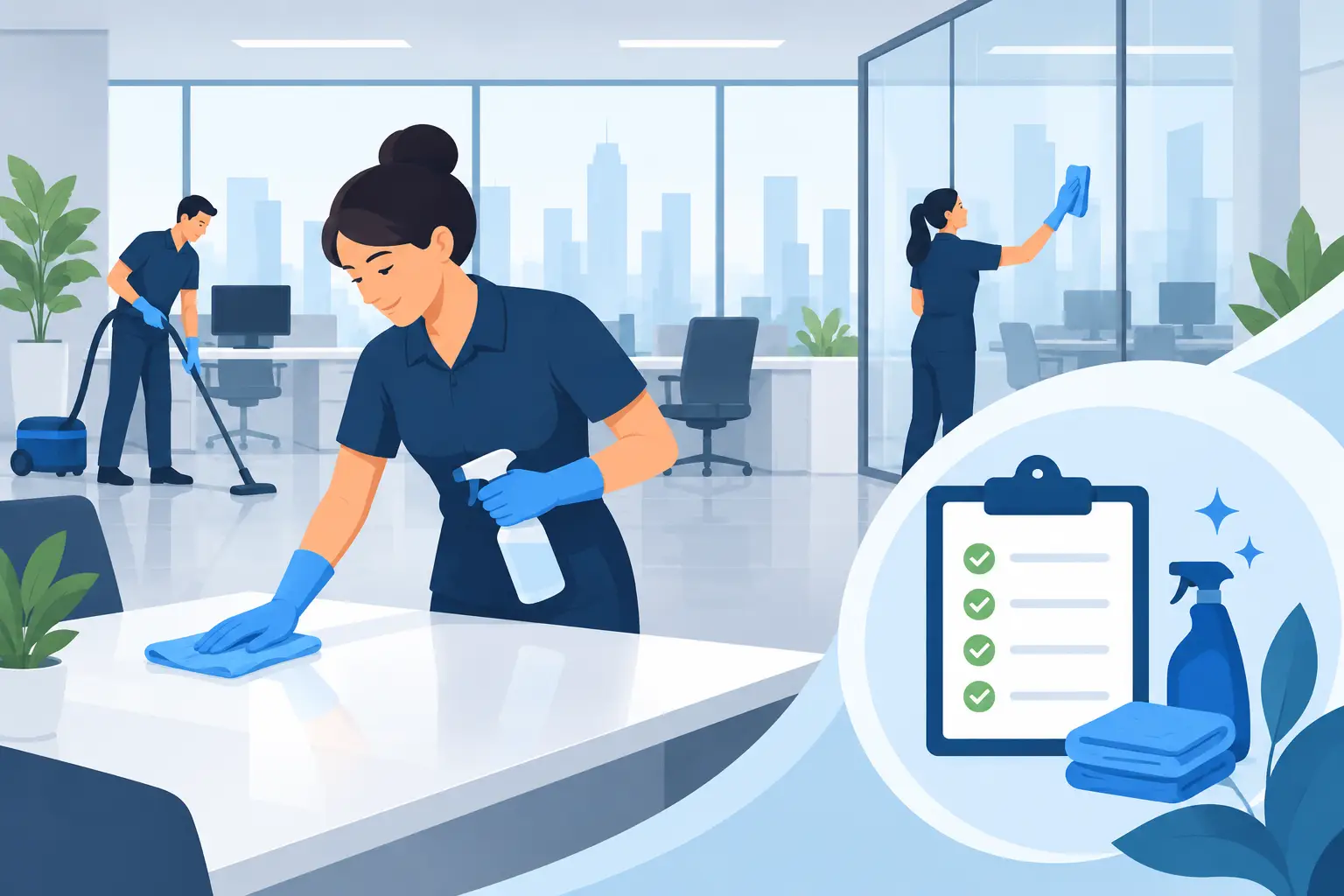
Commercial Cleaning Scope Guide for Reliable Service
A cleaning quote can look clear until the first missed task. Was the inside of the microwave included? Who handles elevator tracks, breakroom refrigerators, or a spill in the lobby? A well-written commercial cleaning scope guide answers those questions before service begins, so managers, staff, and cleaners share the same expectations.
For offices, retail spaces, strata properties, medical offices, schools, and warehouses, the scope of work is more than a task list. It is the operating plan for a cleaner, healthier, guest-ready facility. The right scope protects your budget, reduces complaints, and makes it much easier to hold a cleaning provider accountable.
Start With the Space, Not a Generic Checklist
Every facility has different traffic patterns, risks, and priorities. A small professional office may need spotless restrooms and clean client-facing areas each evening. A warehouse may need dust control, floor care, and dependable cleaning around active operations. A daycare requires careful attention to high-touch surfaces and product selection.
Begin by documenting the property clearly. Include the total square footage, number of floors, restrooms, kitchens or breakrooms, elevators, entrances, meeting rooms, storage areas, and any tenant or public spaces. Photos and a walkthrough are useful because they expose details that floor plans miss, such as glass partitions, carpeted stairs, loading docks, or difficult-to-reach ledges.
Then identify what matters most to the people who use the building. Property managers may prioritize common-area presentation. Office administrators may care most about desks, restrooms, and garbage removal. Retail operators may need polished floors and fingerprint-free doors before opening each day. The cleaning plan should reflect that reality rather than treating every room the same.
Define Tasks by Area and Frequency
The most useful scopes separate recurring work by location and state how often each task will be completed. “Clean office” is too vague. “Empty all desk-side and kitchen waste, replace liners as needed, vacuum carpeted areas, and disinfect restroom touchpoints after business hours, Monday through Friday” is measurable.
Daily or Each-Service Tasks
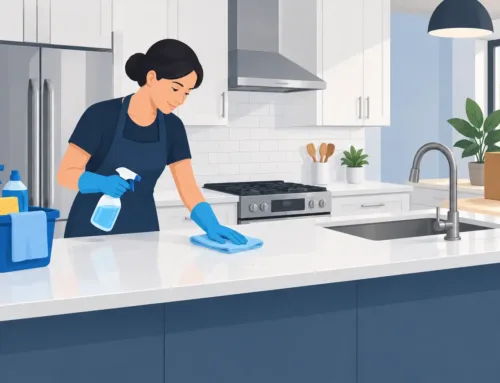
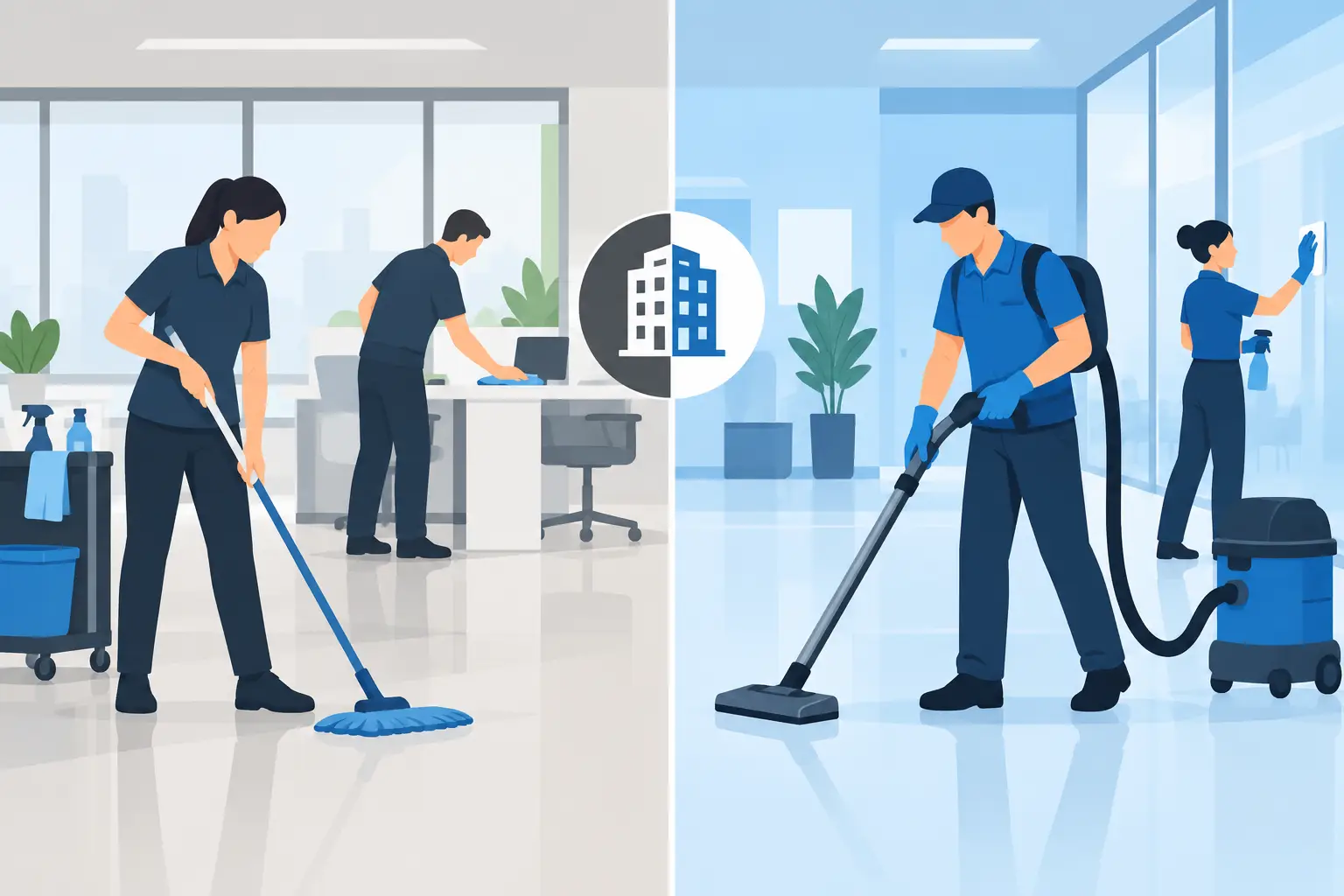
These are the tasks that keep a facility presentable and functional between visits. They often include emptying trash and recycling, wiping and disinfecting restroom fixtures, restocking paper products supplied by the client, vacuuming entryways and work areas, mopping hard floors, and cleaning visible marks from glass doors.
High-touch points should be named rather than assumed. Door handles, elevator buttons, light switches, shared tables, handrails, faucet handles, and reception counters may need attention at every visit, especially in busy public spaces.
Weekly and Periodic Tasks
Some work does not need to happen daily, but it should not be left to chance. Weekly tasks may include detailed dusting of ledges and blinds, cleaning inside microwave ovens, wiping baseboards in high-visibility areas, and spot-cleaning upholstery. Monthly or quarterly work can include interior glass, high dusting, machine floor scrubbing, carpet extraction, and detailed cleaning of refrigerators.
Frequency depends on foot traffic, weather, business hours, and the kind of work performed on site. During wet seasons, a lobby may need entry mat service and floor mopping far more often. A lightly used office may not need a full carpet clean as often as a busy retail store. A good provider will recommend a practical schedule, then adjust it when the facility’s needs change.
Set a Clear Standard of Clean
A scope needs quality standards, not just chores. Without them, one person may consider a floor clean because it was vacuumed, while another expects corners, edges, and visible debris to be addressed.
Use observable standards. For example, restroom mirrors should be streak-free; bins should be emptied without overflow; floors should be free of visible dirt and sticky residue; and touchpoints should be cleaned according to the agreed process. Glass entry doors should be free of fingerprints at eye level. These standards give supervisors and cleaning teams a shared reference point.
It also helps to distinguish between cleaning, sanitizing, and disinfecting. Cleaning removes soil and debris. Sanitizing and disinfecting involve product-specific directions, contact times, and suitable surfaces. In medical offices, daycares, and other sensitive settings, those distinctions should be written into the plan. Product choices should also account for allergies, occupants, floor materials, and any environmental preferences.
Make Inclusions and Exclusions Plain
Surprises are usually caused by assumptions. The scope should state what is included in the regular price and what requires separate approval. This protects both the facility and the cleaning team.
Common exclusions may include exterior window cleaning, deep carpet extraction, post-construction debris removal, biohazard cleanup, pest waste, high-reach work, excessive clutter removal, and cleaning inside personal drawers or locked offices. These are not necessarily unavailable services. They simply need the right equipment, staffing, timing, or pricing.
Be equally specific about supplies. Will the cleaner provide standard equipment and eco-friendly cleaning products? Does the client provide hand soap, paper towels, trash liners, and toilet paper? Who approves replacement products if stock runs low? A short supply protocol prevents a restroom from running out of essentials simply because each party thought the other was responsible.
Plan for Access, Security, and Safety
A reliable commercial cleaning scope covers how cleaners enter, work in, and secure the property. List access methods, alarm procedures, lock-up requirements, restricted rooms, parking instructions, and the primary contact for urgent issues. If service happens after hours, explain whether staff may be present and what areas must remain available.
Security matters just as much as appearance. Ask for confirmation of insurance coverage, worker screening practices, and local workplace safety registration where applicable. For properties with confidential files, medical information, or valuable inventory, define rules for desks, records, keys, and incident reporting.
Safety details should be practical. The scope can specify wet-floor signage, approved products for sensitive surfaces, ladder restrictions, and procedures for reporting damaged flooring, leaks, broken fixtures, or hazards. A cleaning team should not be expected to repair a problem, but they should know how and when to report it.
Include Communication and Quality Checks
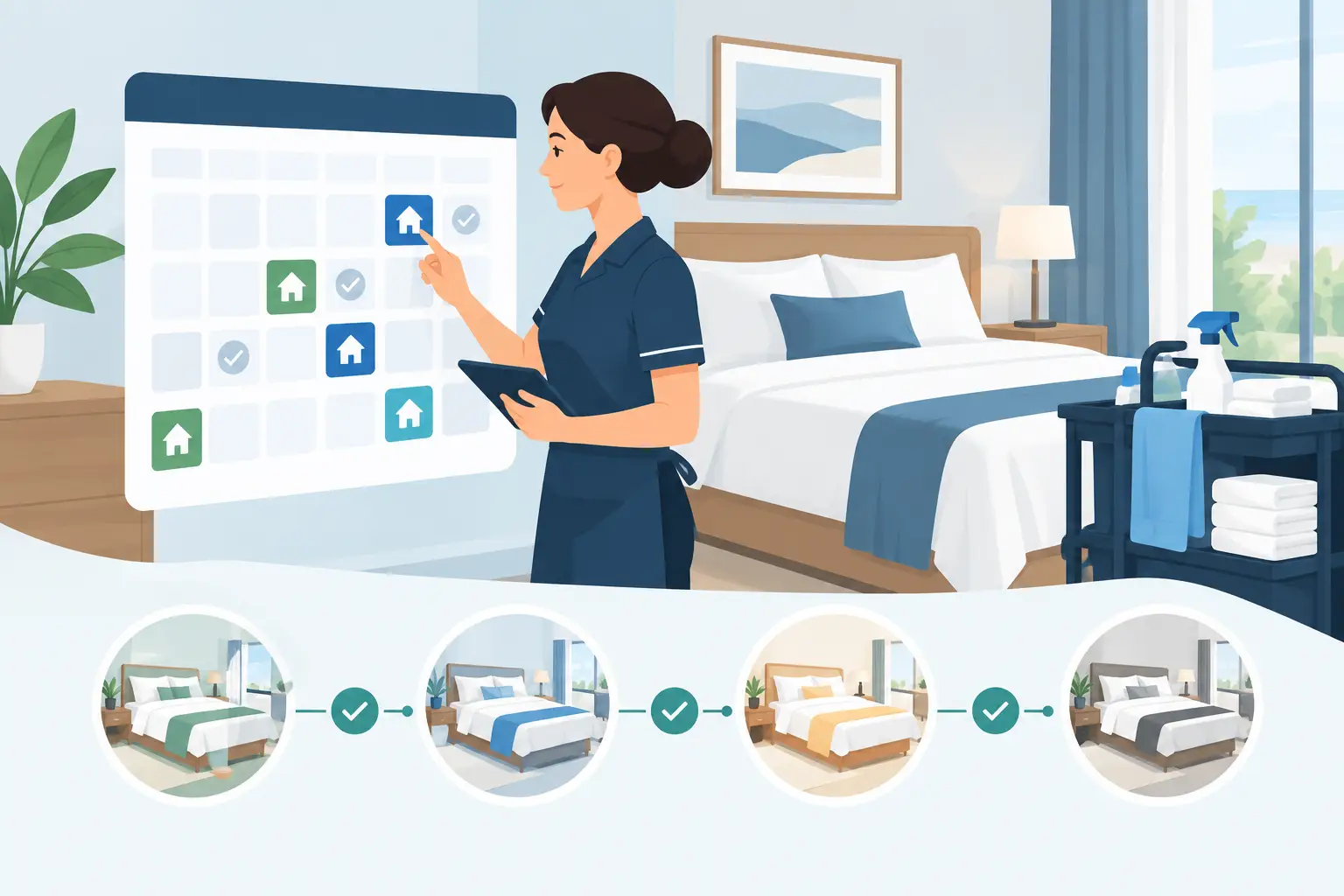
Even a detailed scope needs a simple way to handle changes. Facilities evolve. A meeting room becomes a daily-use space, a tenant moves out, or a busy season creates more garbage and floor traffic. Set a process for requesting extra work, approving additional costs, and updating the schedule.
Regular quality checks keep small issues from becoming ongoing frustrations. This can be as simple as a site checklist, a monthly walkthrough, or a shared communication log. The goal is not to create paperwork for its own sake. It is to make feedback quick, clear, and fair.
Define who receives reports and how quickly concerns should be addressed. A missed garbage bin may be easy to correct at the next visit. A flooded restroom, broken glass, or major spill needs a faster response path. When expectations are documented, your team does not have to chase answers during a stressful moment.
A Commercial Cleaning Scope Guide for Different Facilities
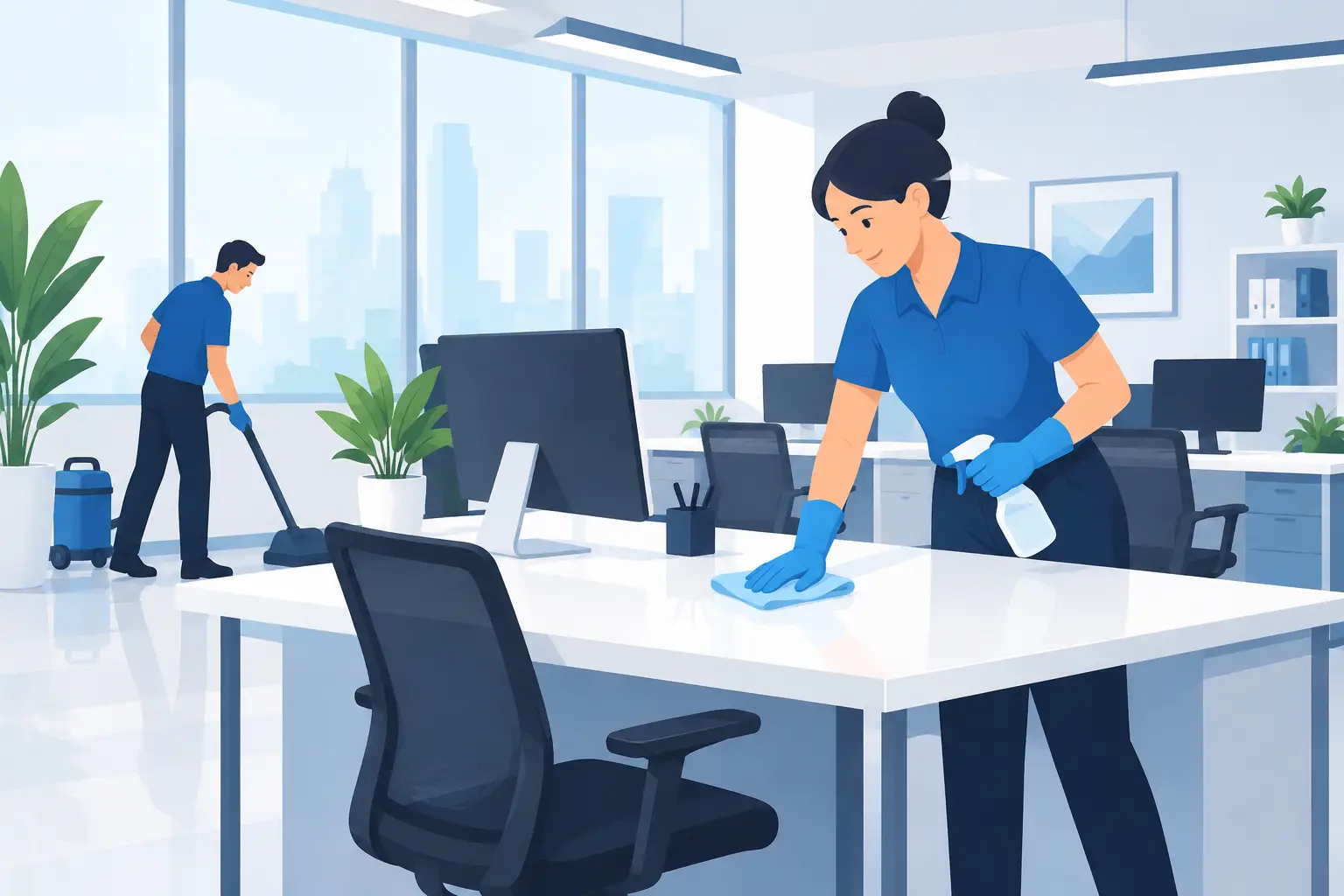
The best cleaning scope is tailored to the building’s real use. For an office, the focus may be clean restrooms, kitchens, workstations, conference rooms, and presentable reception areas. A retail location may prioritize storefront glass, fitting rooms, checkout counters, and floors that stay safe and polished during customer hours.
Strata and multifamily buildings often need recurring attention in lobbies, hallways, elevators, mail rooms, garbage areas, and shared amenities. Medical offices may require detailed treatment of patient-facing spaces, carefully selected products, and strict attention to cleaning procedures. Schools and daycares need frequent care for restrooms, common touchpoints, and shared activity areas, with products appropriate for children and staff.
Warehouses and post-construction spaces are different again. Dust, loading areas, safety zones, and specialized floor care may matter more than desk cleaning. The key is not to force one template onto every property. It is to create a scope that supports how the space actually operates.
Questions to Ask Before You Approve a Scope
Before signing a commercial cleaning agreement, make sure you can answer a few practical questions. What tasks happen at every visit, and what happens weekly or monthly? Which areas are excluded? Who supplies consumables? How are missed tasks reported and corrected? What happens if your facility needs an extra service or an emergency cleanup?
Also ask whether the provider can scale with you. A service that works for a small office should be able to adapt when you add employees, extend business hours, host an event, or take on another location. Speedy Sparkle Cleaning approaches commercial work with that same focus: clear expectations, dependable scheduling, insured professionals, and detailed service that fits the property.
A strong scope should make your day easier, not add another job to your plate. When every task, frequency, standard, and point of contact is clear, your facility can stay clean and welcoming while your team stays focused on the work that matters.
About the author : Goldy Grewal

Goldy Grewal is the founder of Speedy Sparkle Cleaning Services, a Vancouver-based home and commercial cleaning company. Goldy started the business to bring honest, flat-rate pricing to Vancouver homeowners after seeing too many families hit with surprise hourly bills. With 5+ years of experience and 1,000+ cleans completed across Greater Vancouver, Goldy leads a fully insured ($2M liability), WorkSafe BC registered, background-checked team.