In House Versus Outsourced Janitorial Services
A cleaner calls in sick before a busy Monday. The lobby still needs attention, restrooms need supplies, and your staff or tenants will notice if the floors are skipped. That is where the in house versus outsourced janitorial decision becomes very real. It is not only about the monthly invoice. It is about who is accountable when cleaning cannot wait.
For offices, strata properties, retail spaces, medical offices, schools, and warehouses, both models can work. The better choice depends on the size of your facility, the consistency of your cleaning needs, the level of oversight you can provide, and how much risk your team is prepared to manage.
In House Versus Outsourced Janitorial: The Core Difference
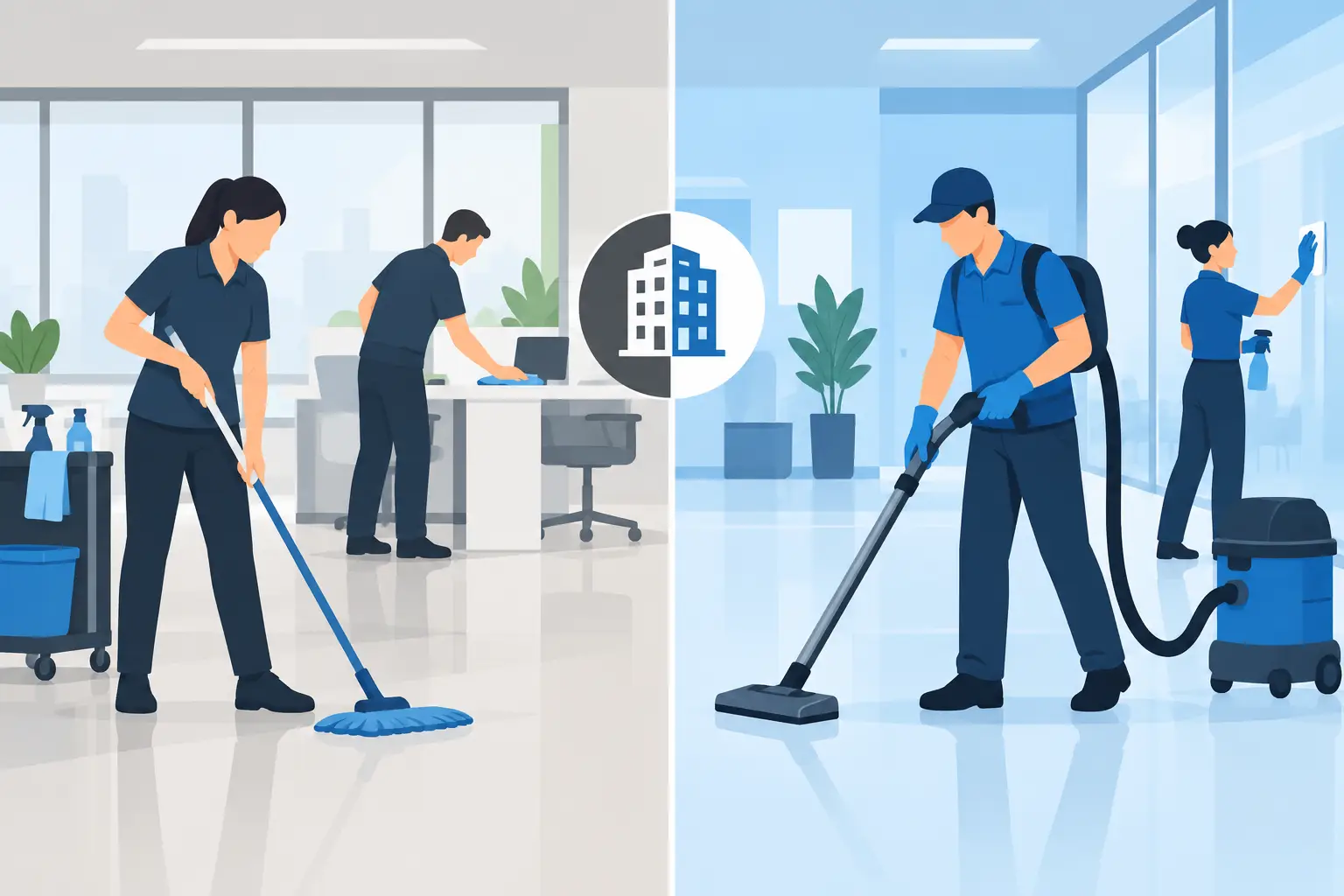
An in-house janitorial program means your organization hires cleaners directly. You manage recruiting, payroll, training, schedules, supplies, equipment, supervision, and backup coverage. Your cleaners are part of your team and may work only at your property.
Outsourced janitorial service means you hire a cleaning company to deliver work under an agreed scope, schedule, and price. The provider manages its own staff, training, insurance, supplies, and day-to-day labor coverage. Your responsibility is to set expectations, communicate site needs, and hold the provider accountable for results.
Neither option automatically produces better cleaning. A well-managed internal team can know a building exceptionally well. A dependable cleaning partner can bring trained crews, clear systems, and reliable coverage that are difficult for one property to build alone. The question is which arrangement gives your operation the most dependable results with the least unnecessary strain.
When an In-House Team Makes Sense
An internal janitorial team can be a strong fit for large facilities with constant cleaning needs throughout the day. Think of a hospital-like setting, a major campus, a high-traffic venue, or a large manufacturing site where spills, restrooms, and common areas require immediate attention.
The biggest advantage is direct control. You can adjust priorities quickly, assign a cleaner to a sudden issue, and build procedures around your specific property. Long-term employees may also develop a detailed understanding of tenant preferences, security routines, floor finishes, waste procedures, and areas that need extra care.
In-house staffing can also make sense when cleaning work is steady enough to justify full-time wages and management time. If you need someone on-site for multiple shifts every day, paying a contractor for that same continuous presence may not be the most practical arrangement.
Still, direct control comes with direct responsibility. Your business must recruit qualified workers, conduct background checks, train employees, handle absences, maintain equipment, order products, and address performance issues. You also need to budget for payroll taxes, benefits, workers’ compensation requirements, vacation coverage, and turnover. The hourly wage is only one part of the actual cost.
For a small office, a retail store, or a strata property that needs service a few evenings per week, an in-house program can leave you paying for capacity you do not fully use. It can also put a building manager in the position of becoming a cleaning supervisor when that is not their core job.
What Outsourced Janitorial Can Solve
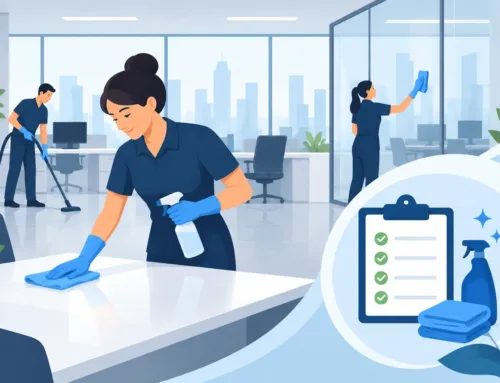
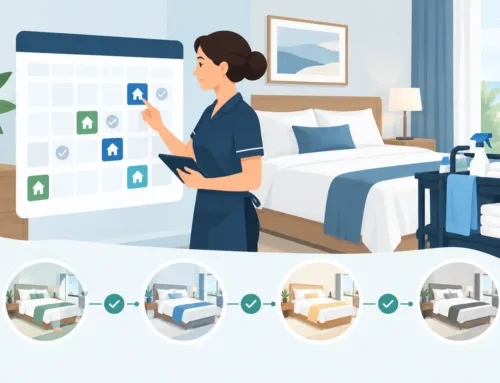
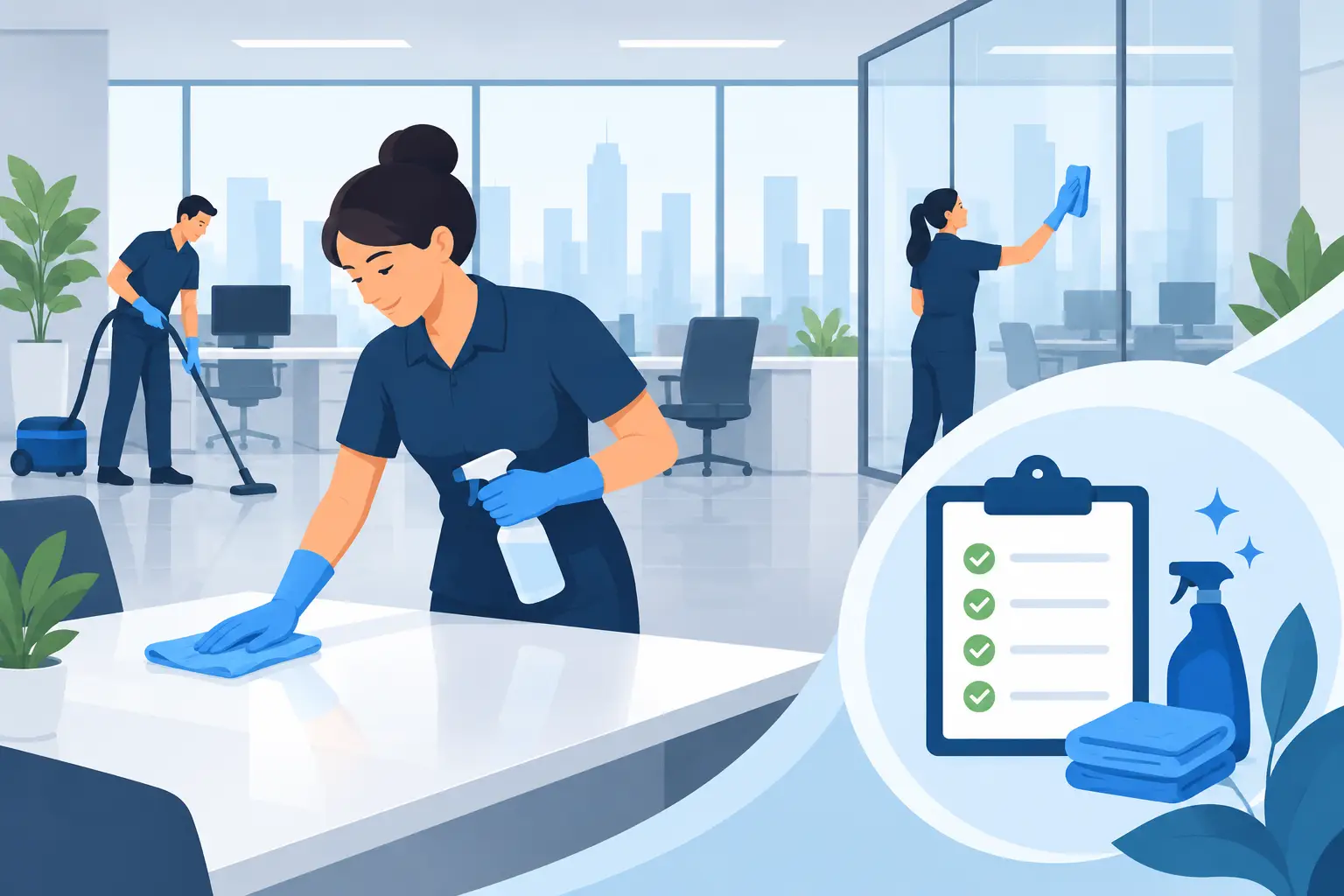
Outsourced janitorial is often the simpler choice for properties that need predictable service without building an internal cleaning department. A qualified provider supplies trained staff, scheduling support, cleaning products, equipment, and replacement workers when someone is unavailable.
That backup coverage matters more than many operators expect. Cleaning is easy to overlook until it does not happen. A missed trash pickup, streaked entry glass, or understocked restroom can affect staff morale, customer perception, tenant satisfaction, and even health standards. With a professional provider, coverage should be built into the service plan rather than treated as an emergency.
Outsourcing can also give a property access to skills that are not needed every day. Carpet care, upholstery cleaning, floor detailing, post-construction cleanup, high-touch disinfection, and window cleaning may require different tools and methods than routine nightly service. Instead of purchasing equipment and training staff for occasional work, you can schedule those services when they are needed.
For many Greater Vancouver properties, a local provider such as Speedy Sparkle Cleaning can offer a practical middle ground: recurring janitorial service for regular upkeep, with additional cleaning available for move-outs, tenant turnovers, events, seasonal detail work, or unexpected needs.
The trade-off is that you are trusting a vendor to represent your property. That makes provider selection essential. A low price is not helpful if the crew is inconsistent, communication is slow, or the scope is vague. Outsourcing works best when the agreement clearly defines what gets cleaned, how often, who supplies materials, how concerns are reported, and what happens if standards are missed.
Compare the True Cost, Not Just the Quote
The most common mistake in this decision is comparing an employee’s hourly rate with a contractor’s monthly price. Those numbers do not measure the same thing.
For in-house cleaning, include wages, overtime, payroll administration, benefits, insurance obligations, uniforms, recruiting, onboarding, training, supplies, equipment repairs, storage, supervisor time, and paid time off. Add the cost of coverage when an employee is sick, on vacation, or leaves unexpectedly.
For an outsourced service, review the full scope and ask what is included. Does the price cover labor, routine supplies, equipment, quality checks, and replacement coverage? Are consumables such as paper products and hand soap included or billed separately? Are periodic tasks like baseboards, interior glass, carpet spotting, or floor maintenance part of the agreement?
A transparent janitorial quote should make it easy to see what you are buying. One price should not become a surprise after add-on fees, unclear exclusions, or reduced service frequency. At the same time, the cheapest proposal may omit the labor hours needed to clean the building properly. A realistic scope is usually more valuable than an attractive number that fails in practice.
Control and Quality Need a System
Some facility managers hesitate to outsource because they worry about losing control. That concern is fair, but control does not have to mean personally managing every cleaner. It can mean setting clear standards and receiving consistent proof that they are being met.
Whether your team is in-house or contracted, quality improves when expectations are specific. A useful cleaning plan identifies the areas, frequency, and standard for each task. For example, “clean restrooms” is too broad. A better instruction defines fixture cleaning, mirror polishing, floor mopping, trash removal, restocking, touchpoint disinfection, and a final inspection.
For outsourced teams, ask how quality is monitored. A dependable company should be able to explain its site inspections, communication process, escalation path, and response time for concerns. It should also provide workers who are appropriately screened, insured, and trained for the environment. Medical offices, daycares, and residential strata buildings each require different levels of care and security awareness.
For in-house teams, make sure quality reviews do not disappear during busy weeks. Managers should have a practical checklist and a way to record recurring issues. Without this structure, even hardworking cleaners may receive mixed directions from different staff members.
Staffing Risk and Compliance Are Part of the Decision
Cleaning teams work around wet floors, chemicals, equipment, waste, keys, alarms, and sometimes sensitive information. The organization responsible for the cleaners must have sound safety practices and proper coverage.
With an in-house team, your business carries the full burden of employment compliance, safety training, incident procedures, and insurance management. With an outsourced provider, you should still verify the company’s insurance, worker coverage, safety approach, and background-check practices. Outsourcing transfers much of the operational workload, but it should never mean skipping due diligence.
Ask practical questions before signing: Who holds keys or access codes? Who responds to an alarm issue? What happens if property is damaged? How are chemical products selected and stored? How will the provider protect confidential documents, resident privacy, or customer information? Clear answers build trust before a crew ever arrives.
A Hybrid Approach Can Be the Best Fit
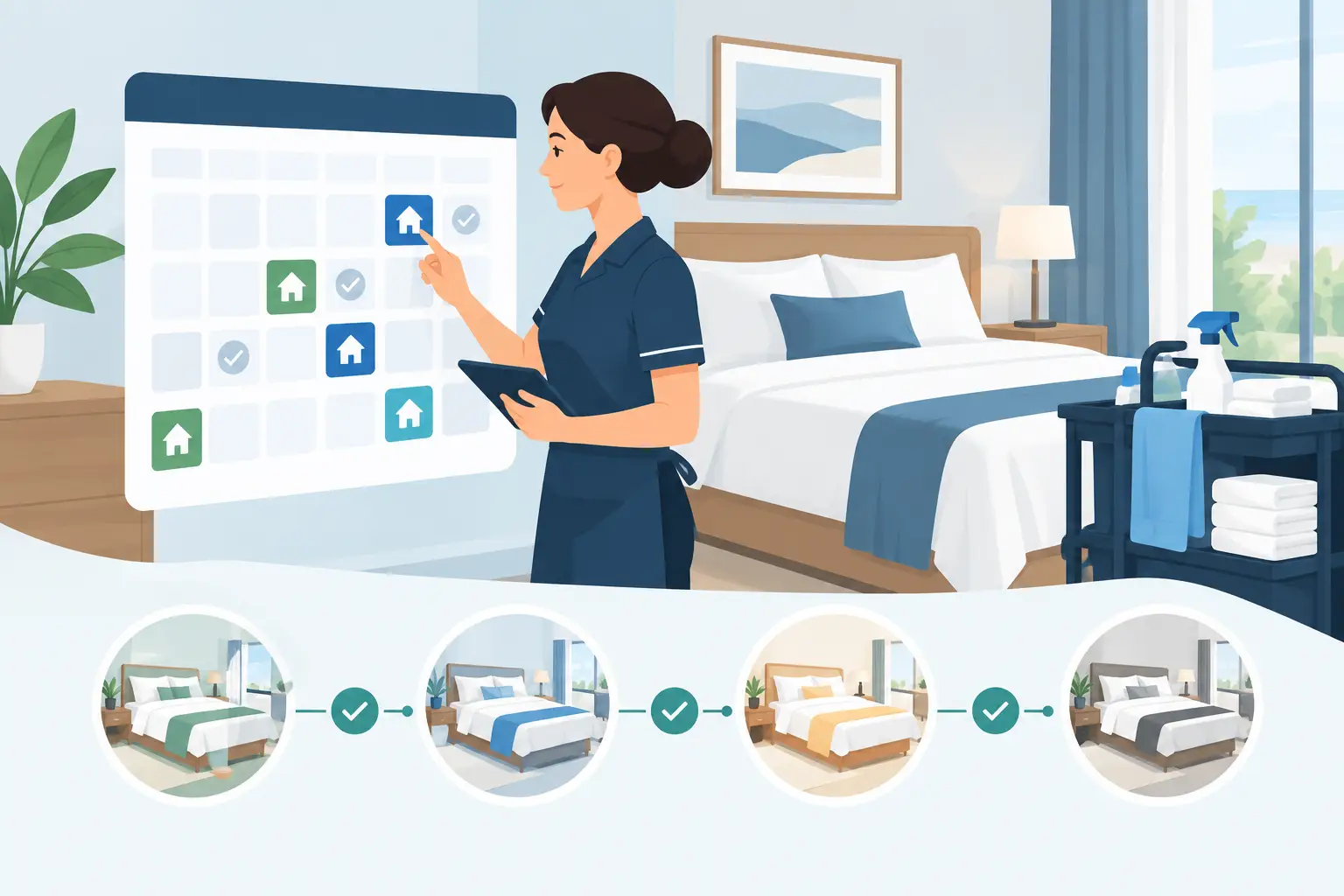
The choice does not always have to be all or nothing. Many organizations keep a daytime porter or caretaker on staff for immediate needs, then outsource after-hours cleaning, carpet care, floor maintenance, and periodic deep cleaning. This can preserve on-site responsiveness without requiring a full internal janitorial department.
A hybrid model is especially useful for strata buildings and busy offices. Your on-site person can handle small spills, package-room tidying, and daily observations, while a trained cleaning crew completes detailed recurring work on a dependable schedule. Each side handles the work it is best equipped to manage.
Before choosing a model, walk your property at the time cleaning will actually happen. Notice foot traffic, restroom use, garbage volume, entryway conditions, security requirements, and the areas visitors see first. Then build a cleaning scope around what the building truly needs, not what a generic package happens to include.
The right janitorial arrangement should make your property feel cared for without creating another job for your team. Choose the option that gives you clear accountability, reliable coverage, and a standard you would be comfortable showing your staff, tenants, customers, or guests every day.
About the author : Goldy Grewal

Goldy Grewal is the founder of Speedy Sparkle Cleaning Services, a Vancouver-based home and commercial cleaning company. Goldy started the business to bring honest, flat-rate pricing to Vancouver homeowners after seeing too many families hit with surprise hourly bills. With 5+ years of experience and 1,000+ cleans completed across Greater Vancouver, Goldy leads a fully insured ($2M liability), WorkSafe BC registered, background-checked team.